Wednesday, March 25, 2009

Spring Break: "Drunk on a beach in Florida": HOUSE PARTY !
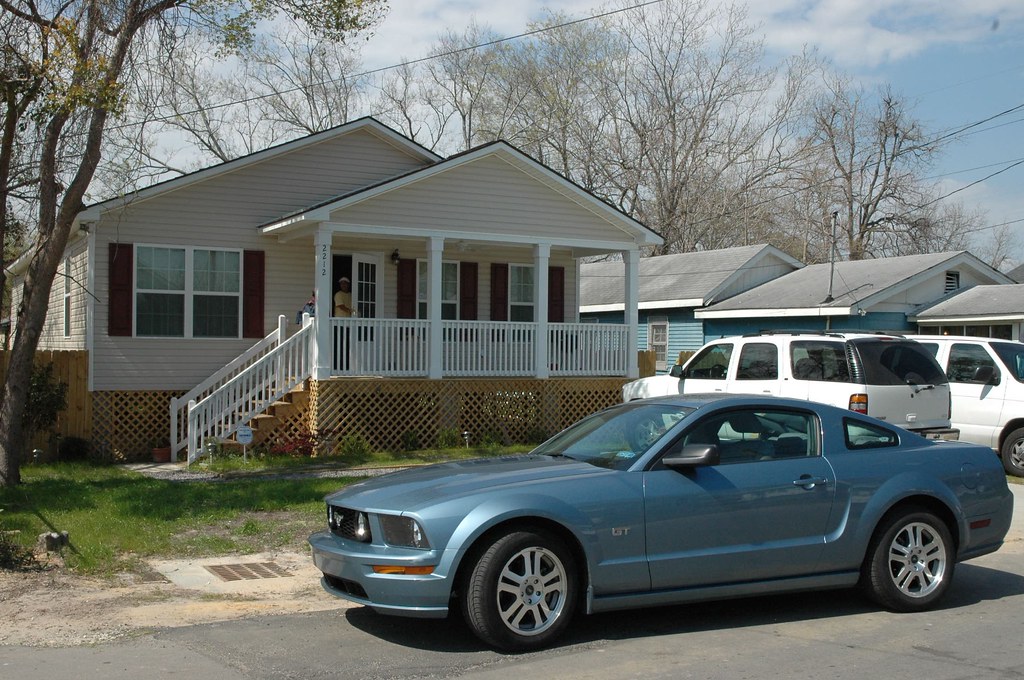

In an article for the Charleston (SC) daily newspaper, The POST AND COURIER, Ken Burger tells us that " Most American students spend spring break drunk on a beach in Florida." Many do as did we, but here in South Carolina during the carefree college years. Thoughtful readers are as tired of the sanctimony and self loathing of reformed booze artists as Florida residents are fatigued by annual onset of artful boozing by college kids on spring break. Was the writer's generation doing then what out of state college volunteers are shown doing here ?

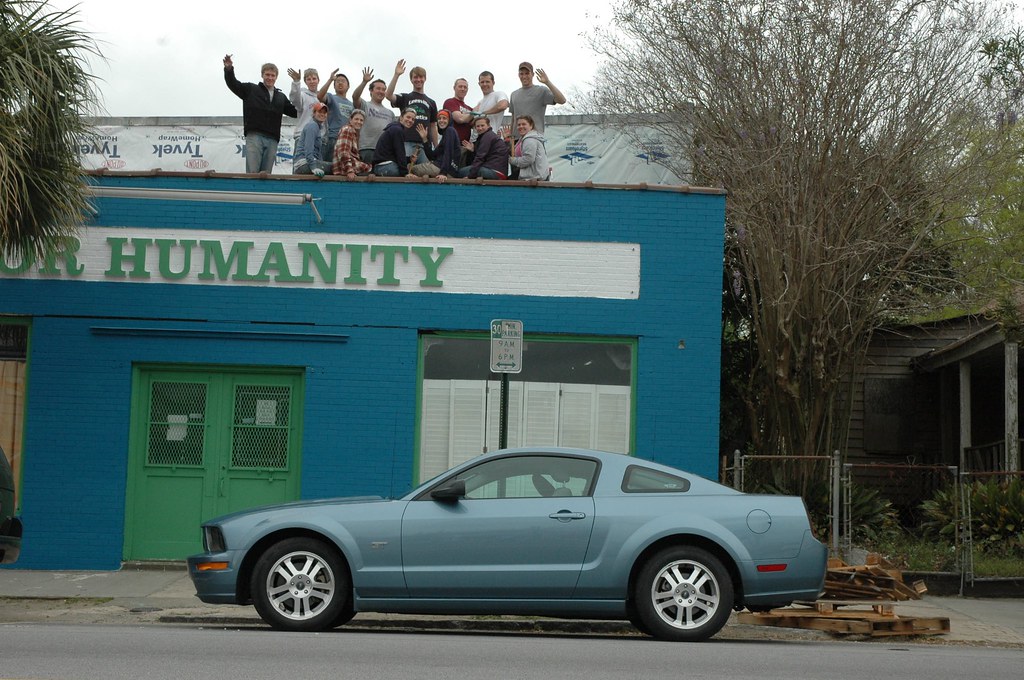
Is this another wild house party full of drunken college kids? No, actually this very attractive new house which is seen behind the Mustang was built by college students on spring break. We didn't bring our portable Breathalyzer, but we know drunks when we see them and this is one happy, but sober group of people.

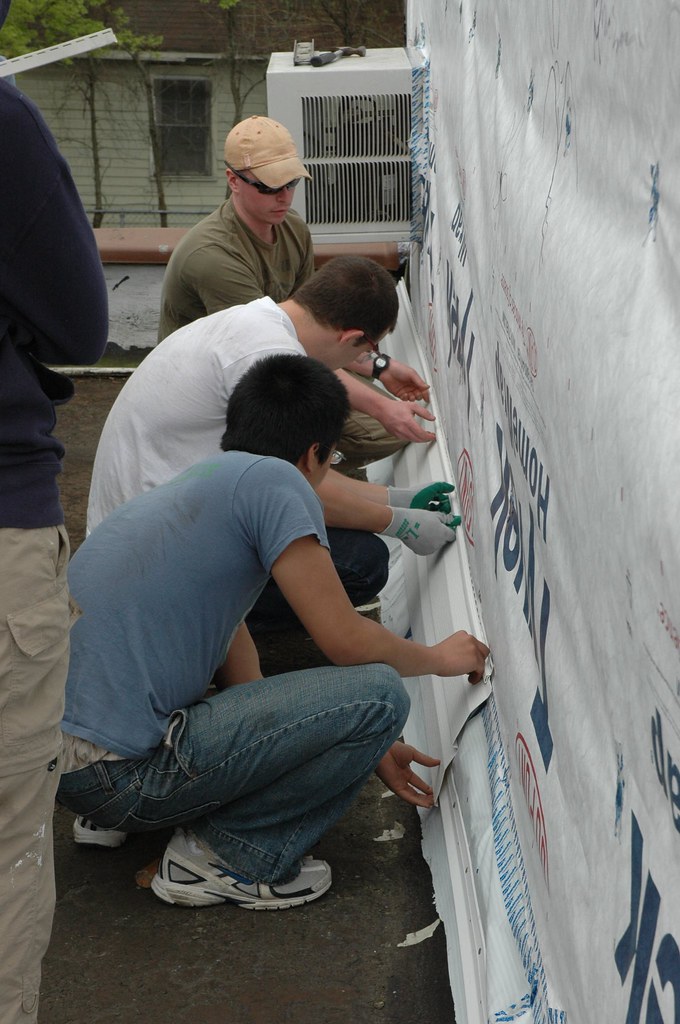
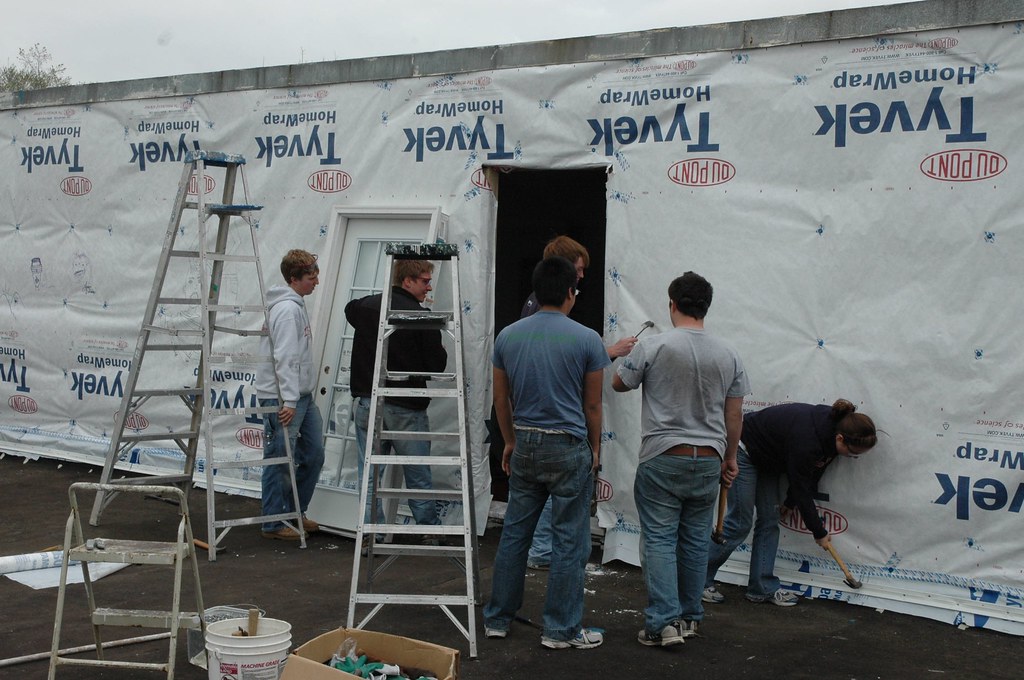
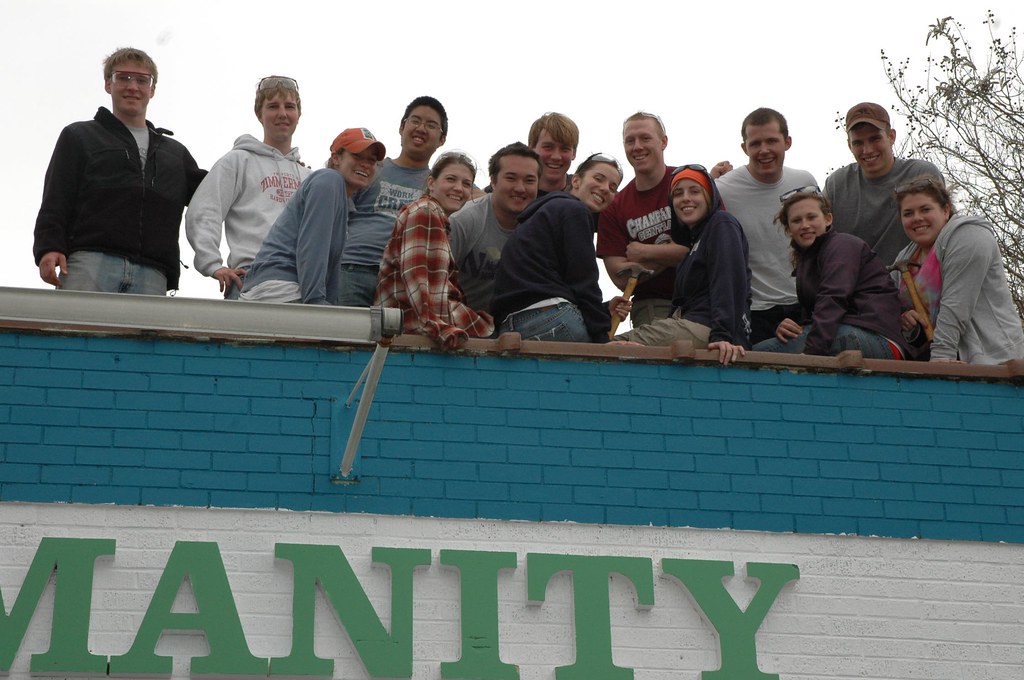
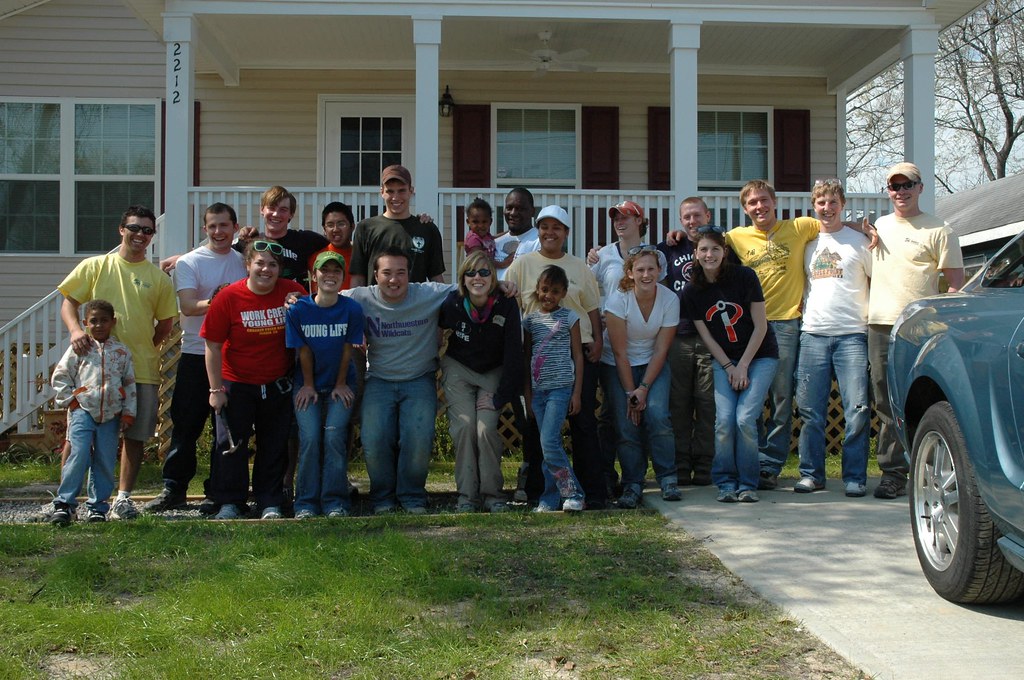
The second photo shows a close up of the volunteers who did most of the heavy lifting and hard work. They subcontract the critical segments which require licensed technicians for electrical and plumbing work, but these young people have put their hearts and backs into building this house. They built this house in a neighborhood which may be called challenged or disadvantaged or said to be in transition. The plan fact is that it's the nicest house by far at an area in which it took courage to build and to live. This could well inspire others to make a similar effort as builders and as new neighbors.

So, rather than tearing up a rental house, these college folks have built a home for a family who will never forget their unselfish gesture. The smiling lady in the white hat is the new owner of the house. The volunteers are smiling from the joy which helping others has brought them. It is reasonable to presume that they will leave a trail of smiles in their wake as the donate their spring break to those in need in South Carolina.

"Drunk on a beach in Florida" Part 2: The ILLINI rock !


We came away from the house party with a good feeling about and toward the college students. They had literally made a new home for a family in a distressed neighborhood at North Charleston, S.C. We wondered what else was on their agenda.

The next day we found them repairing and repainting an old building which serves as the headquarters for Habitat for Humanity in Charleston. The place had begun to look long in the tooth and very short on appearance. These college volunteers have painted the entire exterior of the building. They have also repainted the sign on the front of the building and were busy applying siding to the exterior of the second story. This old place on upper Meeting Street needs all the work which the students are providing.

We noticed quite a few Illinois license tags on vehicles clustered around the building. Many of these students are from the University of Illinois. When it comes to lending a helping had to humanity, the ILLINI rock !

Tuesday, March 17, 2009

One Year Later: Disaster Relief in Branchville ?


On March 15, one year, one day ago, a tornado touched down at Branchville, SC, visiting damage upon that small town as seen in the photos. These few buildings were badly damaged, but most were not including structures very close to the vortex. Torandos are like that: selective, narrow, arbitrary.

Unlike our coastal hurricanes, tornados do not get named, cannot be planned for and you don't know that they're coming until they are gone. Hurricanes are like large armies massed and marching across someone's country. A tornado is like a stinger missile out of nowhere. Another difference is that tornados do not unite people as the hurricane usually does. One family loses their house, but the one across the street hasn't a scratch. The immediate neighbors all pull together, but beyond that narrow radius, few people really give much of a hoot.

If there is not a uniform blanket of photogenic devastation, it's not exciting enough for network news and fails to gain notice, it didn't happen. The big question, of course, is who or what agency will clean up this mess. Some buildings are likely under insured if they insured at all. Declaring this a "disaster area" is a bit complicated.

A law called the Stafford Act defines the process that triggers most federal disaster assistance other than assistance for crop losses. A big news splash is very helpful because the criteria for disaster declarations are vague. The law defines only two categories of presidentially declared disasters: "emergencies" and "major disasters".

Where the costs of a damage exceeds the resources of state and local government, a governor can ask the President to declare a major disaster. If the President determines that the damage is severe enough, the affected area then becomes eligible for FEMA assistance.

One year and one day ago we predicted that was unlikely to happen. To date we seem to be have been correct.

Saturday, March 14, 2009

Pedro sez, "Chili tonight, but uncertain Tamale"


Our arrival at Hamer, SC, in search of the bottling plant for legendary Blenheim Ginger Ale was disappointing and strange. We found an unremarkable concrete block structure behind which was a labyrinth of piping and a very large tank marked "CO2". So much for natural carbonation. The front of the place has two resin or plastic eagles pitched and perched on pipe legs at either side of the door. It is sequestered down a short dirt road from a gate beyond which visitors were not allowed. The gate had been left open. The unadorned grounds are used as random storage for rusted implements. The plant sits on land used for other things. If you removed some of the modern junk and scattered a few 1956 Chevys around, it could pass for Cuba.

This is neither the original plant nor ownership. We got a different story from each of the several people we asked about the place none of whom we will quote. It did not fit our expectations or the projected image of the product. Hamer, we found, was right in the middle of the famous tourist attraction, South of the Border. On that account it did not seem like a wasted trip.

We quickly fell under the spell of Pedro's sombrero. South of the Border or "SOB" (black letters painted on a large YELLOW elevated water tank) for short, was born of the inventive talents of the late Alan Schafer more than 50 years ago. Schafer legally sold beer at his store just inches within the South Carolina side of the state line. Inches north was dry Robeson County, North Carolina, the citizens of which were only too happy to step over the line for good cold beer. So, we drove four hours looking for a ginger ale plant and wound up at a beer joint turned tourist trap empire.

At the beginning Schafer began importing trinkets from Mexico to enrich his South of the Border motif. He must have learned early on that bad taste can be bankable and that ethnic funmaking is fully acceptable as long as it's at the expense of the right ethnicity. Perhaps he saw that comic images of certain folks eating watermelons and picking cotton was causing considerable ill will and sharply diminishing revenue for traditional roadside stands.

In a few years the Frito Bandito would be drawing belly laughs with TV viewers and selling corn chips by the carload. Unlike Frito-Lay, however, Schafer didn't roll over when joshing the Mexicans became a raised issue. In spite of brewing demands to sanitize that image including an undocumented protest from the Mexican Embassy, Schafer pulled only a few of the more exaggerated Mexicanisms from his billboards, but then put them all in a colorful booklets which he sold quite successfully to customers in his gift shops. He gave up nothing while making a bit more money in the process. He possessed the instincts of the pure promoter unfettered by distractions.

We prowled around the compound checking out the amusements, following a Zebra, looking at the people seeking relief from the monotony of Interstate 95. Upon closer inspection we found that several buildings were still "Closed for the Winter". An adjacent motel promoted their "Winter Rates" of $33.95. One could still pay for a ride in an elevator up to Pedro's sombrero, but we saw the majority of visitors lined up at the restrooms. Pedro's Concrete Gallery was also closed, but we peeked in to find nothing more than an assortment of dreadful cement statuary of the type seen in the yards from hell along our way. Two gargantuan concrete Pedros are posted at the gallery entrance. They seem more the creatures of Diablo than Disney. In any respectable horror movie they'd come alive and turn the tourists to stone in revenge for the many gags at Mexican expense or just eat them when the cement tacos ran out.

With an endless supply of bored motorists informed of Pedro's charms by a dense series of signs many miles up the road, things are slow. The gaudy nature of the place was the bulk of its charm, but things now look worn and tired. It presents as a small town in decline. Shafer may have stored tumbleweed somewhere for the final phase of SOB. He could turned the demise of SOB into a profit. What we saw looked like the figurative winter in the middle of July for Alan Schafer's once joyfully gaudy empire of fun. Mr. Schafer died in 1991 and Pedro, while not on life support, is just a little short of wind and a bit long in the tooth.

Monday, March 02, 2009

Hunkered Down in our Hacienda Hideout


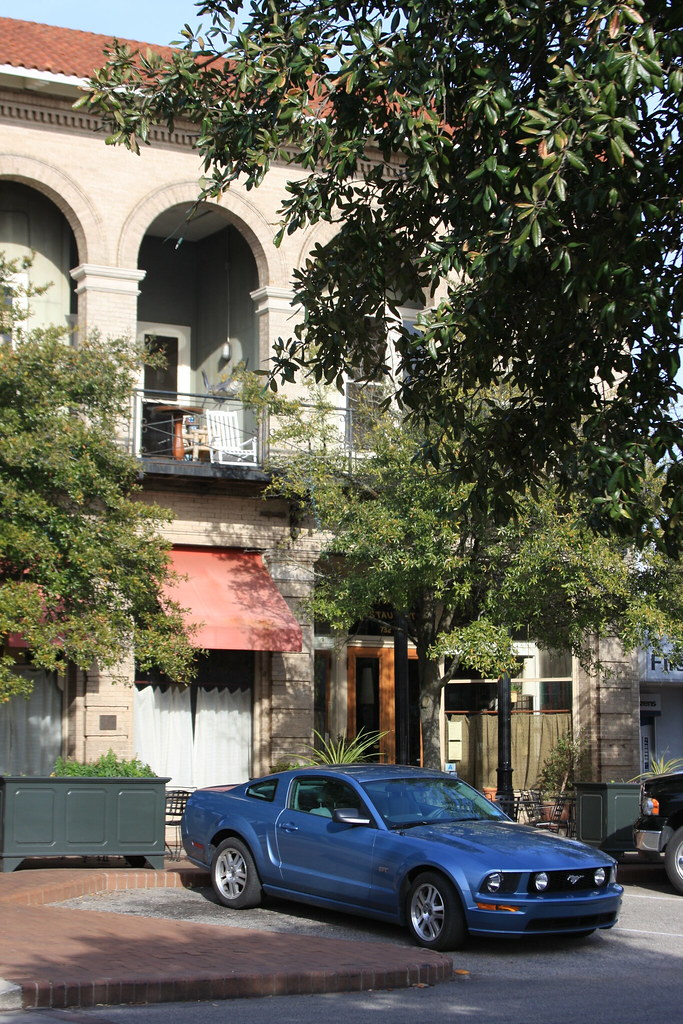
Where does the rolling Mustang come to a rest? Most of our posted photos are in the field, off the road or on the move. One must wonder. Batman has a cave in which to store his Batmobile and a great mansion in which to read his newspaper. We seem to deserve a nice little hacienda hideout, a bit this side of Bruce Wayne, but comfortable and functional.

We have a great view of the waterfront from our private perch. In that comfy white chair we spend hours in reflective repose. We snatched that table from the set where a Corona ad was being shot. We keep the same such bottles on it so the table will feel comfortable in captivity. Just over our chair can be seen our trophy Blue Marlin nearly half the length of the car and almost as blue. When the urge to roll strikes us we leap from the chair, bounce off the red awning and land gracefully on the Mustang's trunk. We're not as good as J.T. Hooker in "The Big Chill," but then we're not on TV.

Where exactly is this place? Well, it's nowhere that Map Quest can find us and no amount of Googling will yield our coordinates. It's not that we're anti social, but we'd just as soon not have any Amway sales callers or Jehovah's Witnesses knocking on our door.